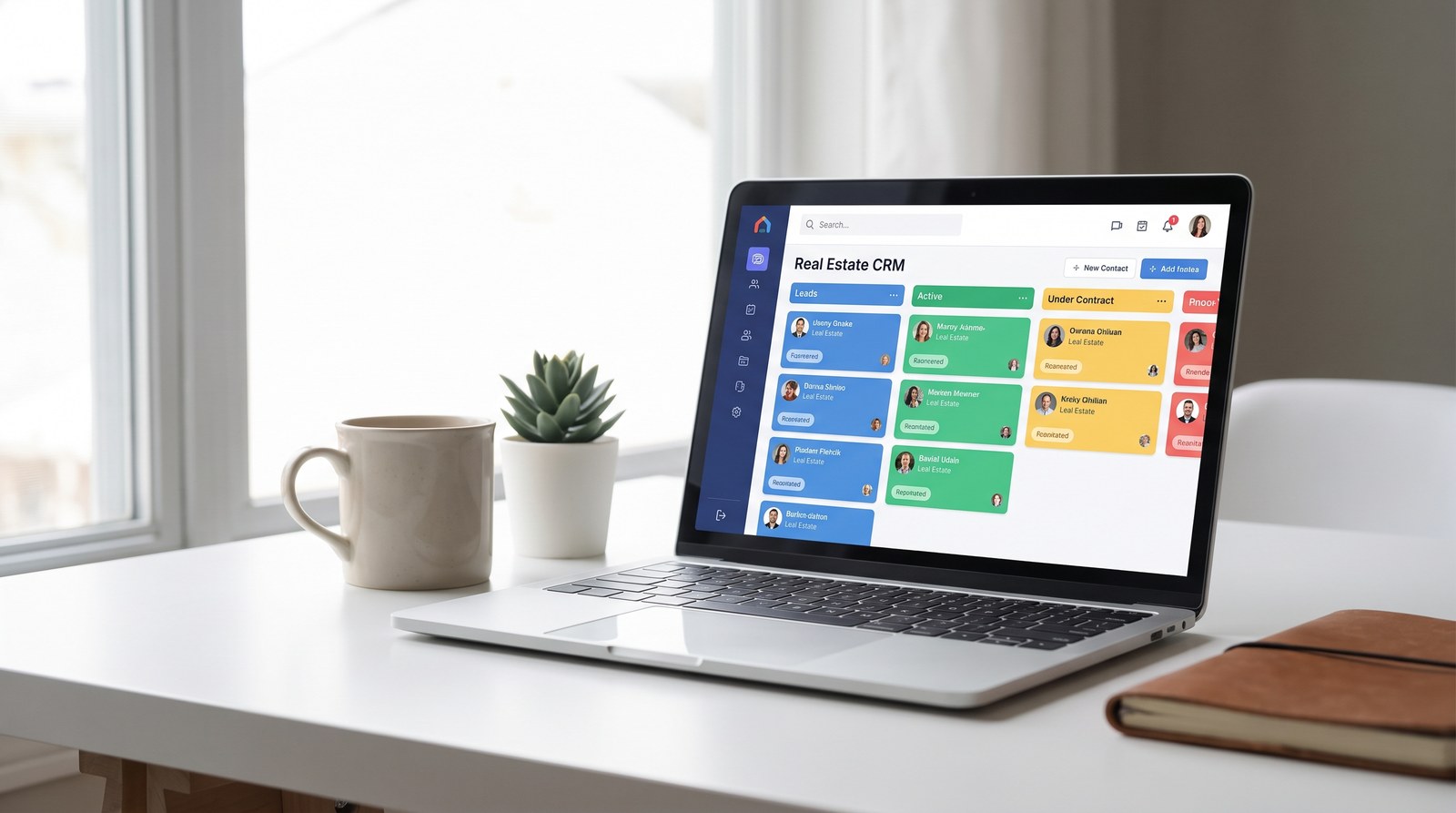
Choosing a real estate CRM is a strategic decision that shapes your agency’s growth for years. The wrong tool creates friction; the right one becomes a conversion engine.
Why a real-estate-specific CRM is essential in 2026
The real estate market is more competitive than ever. Prospects are demanding, response times are shrinking, and agencies that do not structure follow-ups lose deals every month.
Unlike a generic CRM such as Salesforce or HubSpot, a real estate CRM embeds industry specifics: properties, visits, mandates, matching, and transaction stages.
The 8 must-have criteria to choose your real estate CRM
1. Complete sales pipeline management
Your CRM must let you see each prospect’s status in real time: new, qualified, visit scheduled, offer, agreement, won/lost — with clear ownership.
2. Follow-up automation — especially WhatsApp
In 2026, about 85% of French agents use WhatsApp with clients. Your CRM must automate confirmations, reminders, and re-engagement on that channel.
3. Multi-agency and multi-user management
If you manage several agencies — or plan to — your CRM needs multi-agency architecture with permissions, isolation, and consolidated reporting.
4. Integration with your marketing tools
Facebook Ads, TikTok Ads, Google Sheets, email marketing… Your CRM should capture leads automatically from your acquisition channels.
5. PDF property sheet generation and sharing
Property sharing still happens massively via PDF. A good real estate CRM generates sheets automatically and sends them in one click (email/WhatsApp).
6. Reporting and business KPIs
Conversion rate by agent, average response time, lead-source mix, generated revenue… Your CRM must produce operational KPIs, not vanity charts.
7. Security and GDPR compliance
Prospect data is sensitive. Your CRM must provide encryption, strong authentication, access control, and GDPR processes (export, deletion, consent).
8. Value for money and scalability
A real estate CRM should not cost a fortune. Pricing ranges from €0 (trial/free tier) to several hundred euros per user. Judge total cost of ownership, not sticker price only.
Pitfalls to avoid when choosing
- The “too generic” CRM: Salesforce or HubSpot are excellent products, but they often need months of configuration to fit real estate workflows.
- No API / weak integrations: if your CRM is an island, teams waste time on manual re-entry between tools.
- No French-speaking support: real estate is local. French support (and Arabic where relevant) is an operational advantage.
- Over-long lock-in: avoid rigid annual contracts with no monthly exit option, especially during evaluation.
Our recommendation: test before you commit
The best way to choose a real estate CRM is to test it with your real data and real processes — not a polished demo dataset.
Ready to test a real estate CRM built for the field?
Estaleads offers a free plan up to 50 prospects. Setup in minutes, no credit card required.
Start for freeConclusion
Choosing a real estate CRM in 2026 is not only comparing features in a table. It is choosing the system that makes your team respond faster, follow up systematically, and close more.