A real estate CRM is now the backbone of any modern agency. It centralizes prospects, properties, visits, and sales activity in one system.
CRM software vs property management software: what’s the difference?
Many professionals confuse two tool families. Before investing, understand what separates them.
A real estate CRM manages the client relationship: it captures prospects, qualifies needs, tracks the pipeline, and automates follow-ups to grow revenue.
Property management software manages the portfolio: mandates, rent receipts, co-ownership charges, move-in/move-out inventories — admin of the stock.
The distinction is critical: if you are a transaction agency, you need a CRM. If you manage rentals/co-ownership at scale, you may also need property-management modules.
- Real estate CRM: prospects, pipeline, matching, visits, signatures — grow revenue
- Property management: mandates, rents, charges, inventories — administer the portfolio
- Hybrid solutions: CRM + rental management (Estaleads, Apimo, Périclès…)
The 8 modules of a good real estate CRM
A serious real estate CRM should offer at least these 8 modules. If one is missing, your tool will leave operational gaps.
1. Prospect management
The prospects module captures leads from all sources: web forms, Facebook Ads, portals, walk-ins — with full history and scoring.
2. Property management
Each property has a structured record: photos, price, size, neighborhood, energy rating, mandates, modification history.
3. Sales pipeline
The pipeline visualizes every sales opportunity from first contact to signature. Classic stages: lead, contacted, visit, offer, agreement, closed.
4. Visit tracking
The visits module schedules appointments, sends automatic confirmations, and collects visit feedback.
5. WhatsApp automation
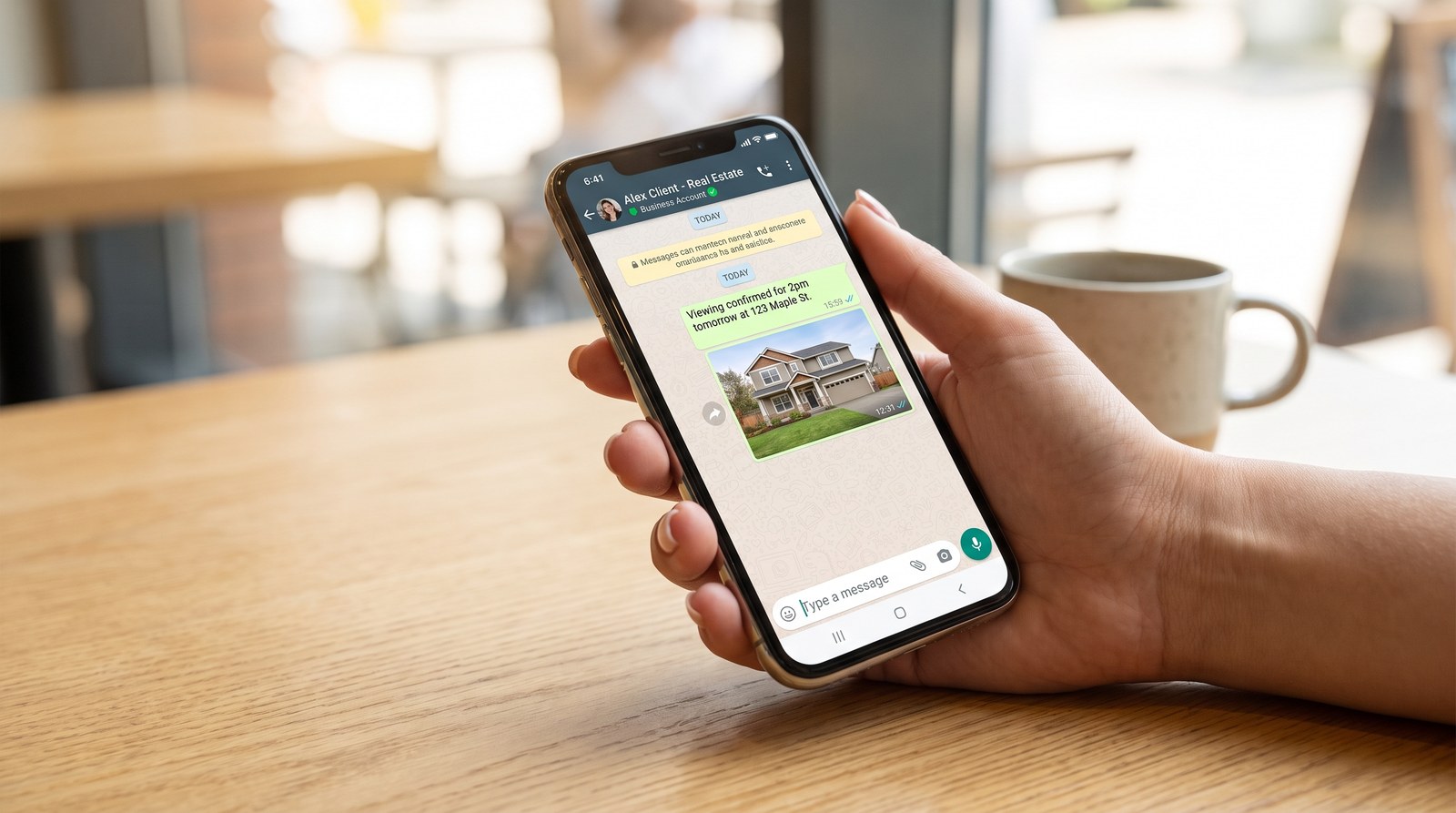
In French-speaking real estate, WhatsApp has become the #1 client channel. A real estate CRM must integrate WhatsApp Business API without fragile workarounds.
6. E-signatures
The signatures module generates and e-signs agreements, mandates, and legal documents with a compliant audit trail.
7. Reporting and analytics
Good real estate software provides real-time dashboards: leads by source, conversion by stage, sales speed, performance by agent.
8. Multi-agency
If you manage several agencies, multi-agency is essential: roles per user, data isolation, and consolidated network reporting.
How Estaleads positions as a reference real estate CRM
Estaleads was designed from day one as specialized real estate CRM software — not a generic CRM with custom fields.
Compared with generic CRMs like Pipedrive or Zoho, Estaleads brings native modules those tools do not have out of the box.
Compared with historical French tools like Apimo or Périclès, Estaleads prioritizes modernity: interface, mobile, WhatsApp-first automation, faster onboarding.
Estaleads stands out on three axes:
- Native real estate specialization: no months of custom modules — ready for the job
- Integrated WhatsApp automation: the preferred channel of French-speaking clients
- Accessible pricing: from €29/month, without long lock-in
This combination makes Estaleads particularly suited to growing agencies that want performance without enterprise complexity.
Real estate CRM software: pricing and ROI
Real estate CRM pricing varies widely. Here is a realistic 2026 comparison:
- Generic CRMs (Pipedrive, HubSpot, Zoho): €15–50/user/month, but often need custom development
- Legacy tools (Apimo, Périclès): €80–150/user/month, often with setup and training fees
- Estaleads: competitive plans with core modules included and fast deployment
ROI calculation should include three levers: time saved, conversion lift, and fewer lost leads.
- Time saved: 15–25 admin hours/month eliminated (data entry, follow-ups, manual reporting)
- Higher conversion: +15–30% prospects converted thanks to automatic follow-ups and matching
- Fewer losses: fewer forgotten prospects, fewer stalled listings, fewer data-entry errors
For an agency generating 200 leads/month at 40% average conversion, moving to 55% with a real estate CRM can mean dozens of extra opportunities per year.
Discover the Estaleads real estate CRM
Free trial, all modules included. Centralize prospects, properties, visits, and signatures in one tool built for the field.
Start for freeChecklist to choose a real estate CRM
Before signing, review these 10 points. More than 2 negative answers should make you pause.
- Real estate specialization: does it natively manage properties, mandates, matching, energy ratings?
- Ease of use: can a new agent be autonomous in under 2 hours of training?
- WhatsApp automation: does it integrate WhatsApp Business API without a paid plugin?
- Lead capture: native connectors for Facebook Ads, portals, web forms?
- Reporting: ready-made dashboards on leads, conversion, sales speed, agent performance?
- Multi-agency: roles and data isolation if you grow?
- French support: French-speaking team and response under 24h?
- Scalability: can the tool follow growth without a platform switch?
- Data migration: import of existing prospects/properties included or easy?
- Free trial: can you test at least 14 days before committing?
This checklist is detailed further in our guide on how to choose a real estate CRM in 2026.
Conclusion
Choosing real estate CRM software is a strategic decision that commits your agency for 3–5 years. The key is not the longest feature list — it is adoption and conversion impact.